About Us
 Formed in 1983 to purchase British Railways (W) Manor class 7820 Dinmore Manor from the Gwilli Railway for the West Somerset Railway, the Dinmore Manor Fund completed the restoration of the engine in 1995 and shortly after joined with the 3850 Preservation Society to form today’s Dinmore Manor Locomotive Limited (DMLL).
‘Dinmore Manor’ returned to traffic following overhaul in 2014, this time at the Gloucestershire Warwickshire Railway. DMLL has subsequently made its home at Toddington on the GWSR In 2014, 3850 came for a gala visit - and for a first, the companies two engines ran together for the first time, 3850 retired there at the end of its ticket in 2015 before it was stripped down for heavy overhaul. 3850 came into service in September 2024 and ran alongside Dinmore Manor until the latter's withdrawal in January 2025
DMLL’s long term commercial strategy is to have two locomotives in traffic with a 3rd under overhaul at any one time. To accomplish this, two further GWR 2-8-0’s were added to the fleet in 2009; no’s 2874 and 3845. In 2016, 2874 was ceded to the 2874 Trust, an independent charity, in order to take advantage of grant funding that DMLL could not apply for. DMLL still remains closely linked with the charity, and is expected to operate the engine upon completion of the restoration from scrapyard condition.
DMLL’s aim is to have a stable of locos earning the funds to ensure an on-going, sustainable future for these wonderful examples of British Engineering and design. The locomotives require a heavy overhaul and boiler restoration at least every ten years – both costly undertakings. DMLL believes the best way to ensure future viability is to have locos earning to pay for current work on other stock, thereby ensuring the “dream of steam” remains a reality for future generations.
The picture below shows 7820 and 3850 coming together at Minehead on the West Somerset Railway - for the gala, 3850 was temporarily re-numbered.

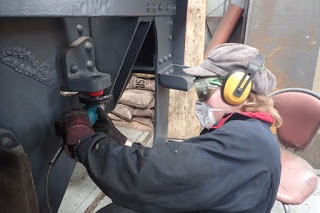
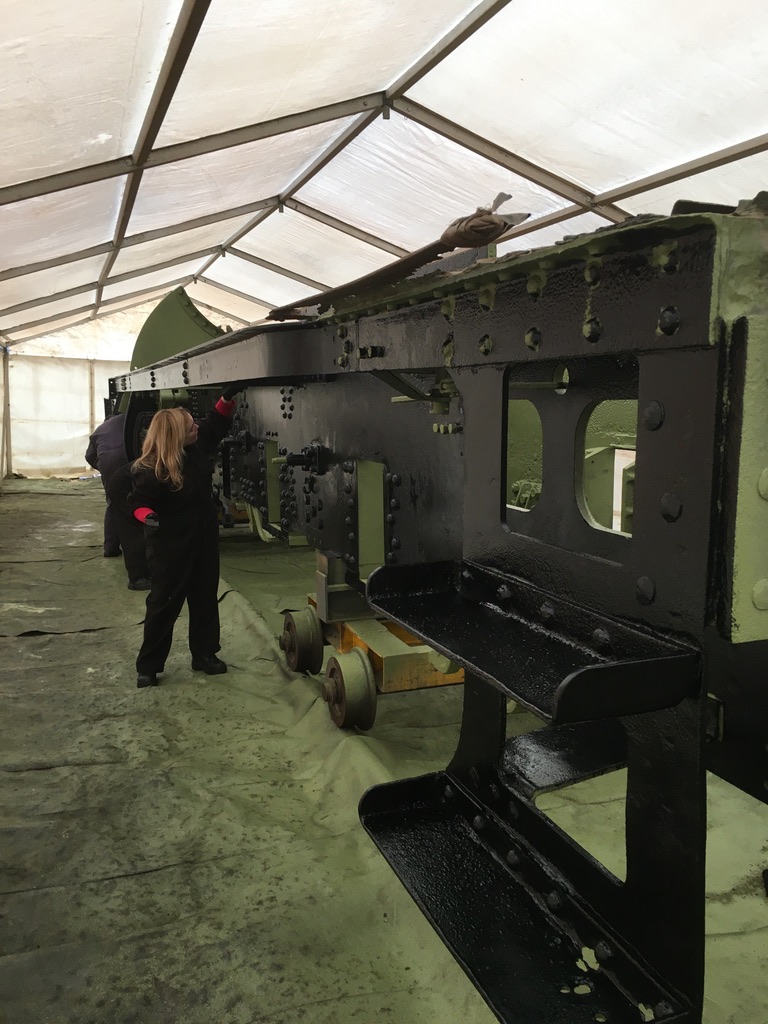
Ever wondered how we turn out a working locomotive?
This is how we do it!
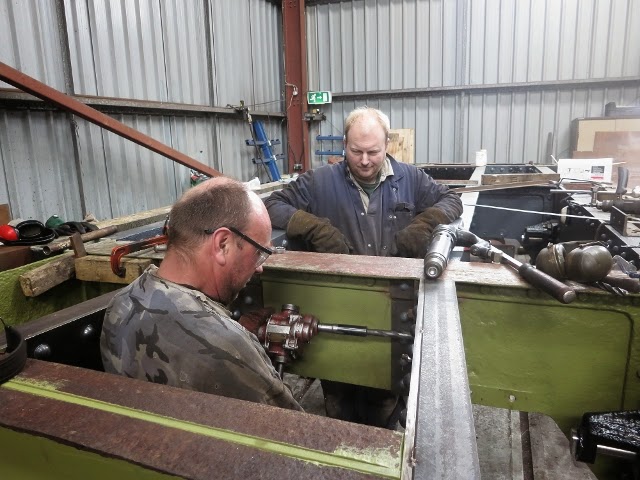
The pictures show a whole range of activities – and show that there is a task that can suite anyone, no matter what age, gender or skill level.
Remember – we are always looking for new volunteers to join our friendly team – full training available – e-mail [email protected] for full details (and if you don’t wish to be “hands on” we also welcome armchair supporters – same e-mail for details)


Andrew working on the same section – here he is drilling a pilot hole before using the mag-drill (seen over his shoulder) to drill a larger hole. Once the centre of the rivet is hollowed out, the rivet buster can be used to remove it completely